
Pinhole Leak Detection & Repair in Beaverton, OR
Beaverton runs some of the softest tap water in America, Bull Run water under 10 mg/L hardness. Combined with 1960s-1980s copper pipe now 45-65 years old, that chemistry produced the pinhole corrosion pattern showing up across Cedar Hills, Garden Home, and West Slope today.
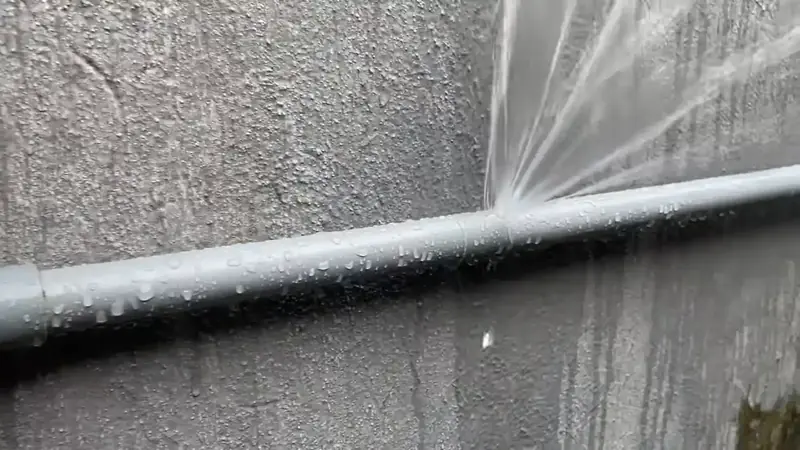
Beaverton's tap water comes primarily from the Bull Run watershed in Mt. Hood National Forest, distributed by Tualatin Valley Water District (TVWD). Bull Run water is extraordinarily soft, typically measuring under 10 milligrams per liter hardness, which is under 1 grain per gallon. That places Beaverton's water among the softest municipal supplies in the United States. For drinking, cooking, and appliances, that softness is a quality-of-life benefit. For copper supply lines installed in the 1960s through mid-1980s, that same chemistry created a slow-motion corrosion problem that Beaverton homeowners are now finding behind their walls.
The mechanism is documented across the Portland metro area: very soft, low-mineral water with low alkalinity arrives at a copper pipe with chemical room to dissolve more minerals. Before TVWD and the Portland Water Bureau implemented current pH corrosion-control adjustments, that slightly aggressive water slowly leached copper from the pipe interior, creating tiny pits. Over 40 to 60 years, those pits deepen until one eventually punches through the pipe wall, a pinhole leak. The pipe exterior looks fine. The fitting looks intact. The only evidence is a mist of pressurized water behind the drywall that runs 24 hours a day until something visible appears: a stain on the ceiling, a bubbling paint patch, a soft spot in the drywall, or a TVWD bill that climbs $40 a month for no apparent reason.
The Beaverton Copper Cohort
The highest-risk homes for pinhole leaks in Beaverton are those built in the 1960s to mid-1980s, specifically in Cedar Hills, Garden Home, Highland Beaverton, West Slope, and parts of South Beaverton. These neighborhoods were developed during Beaverton's first wave of suburban expansion, and the supply plumbing installed during that era is now 45 to 65 years old. TVWD's corrosion-control pH adjustment protects the pipe from the inside going forward, but decades of pre-pH-adjustment exposure already created the pitting structure, the question now is when the pits reach pipe-wall depth, not whether.
The pattern in these neighborhoods is not random individual failures. When a Beaverton home in Cedar Hills begins experiencing pinhole leaks, homeowners who repair only the first visible leak almost always see a second leak appear within 6 to 18 months, then a third. The entire pipe system was exposed to the same water chemistry for the same duration, the pitting is sitewide, not isolated. Our detection team finds all the active leak points at once rather than treating each failure in sequence.
How We Detect Pinhole Leaks Without Opening Walls
Acoustic detection is the primary method for pinhole leaks in pressurized copper supply lines. A sensitive microphone pressed against the wall surface or against accessible pipe sections amplifies the sound that pressurized water makes as it escapes through a pinhole opening. The sound signature of a pinhole leak, a high-frequency hiss distinct from the low rumble of a pipe carrying normal flow, allows our technicians to trace the failure to its source location along the wall surface, narrowing the repair access to a single precise opening.
For multiple simultaneous pinholes or for complex pipe layouts where acoustic signals overlap, we combine acoustic detection with electronic leak detection equipment and pressure-zone isolation. Closing individual supply zones and watching how quickly each loses pressure confirms which zones have active leaks and which are sound. The result is a map of the problem before any wall is opened.
Repair Decision: Spot Repair or Whole-House Repipe?
After detection, the repair conversation depends on how many pinholes we find and what the overall pipe condition assessment reveals. Copper pipe that has experienced one pinhole on a system that is otherwise in acceptable condition may warrant spot repair, the pitted section is cut out and replaced. Copper pipe showing multiple pinholes across the system, or pipe that has reached the age where pitting is widespread even if not all pits have punched through yet, is a candidate for a whole-house repipe in PEX or copper.
We give Beaverton homeowners the honest assessment: if the pipe system has already produced two pinhole leaks and the home is in the 1965-1985 Cedar Hills or Garden Home cohort, a third and fourth leak are likely within 24 months. At that point, the cumulative cost of repeated spot repairs, plus the water damage from each undiscovered interim leak, exceeds the cost of a planned repipe. Homeowners in Cedar Hills and Garden Home with copper pipe in this age range should also consider a professional acoustic scan even before visible staining appears. We present that math clearly, without pressure, so homeowners can make an informed decision. Call (503) 974-3329 for same-day acoustic detection anywhere in Washington County.
Frequently Asked Questions
Very soft water, like Bull Run water at under 10 mg/L hardness, contains very few dissolved minerals. Without sufficient mineral content to coat the interior of a copper pipe with a protective layer, the water can slowly dissolve copper from the pipe wall itself. This process, known as corrosive copper pitting, was more pronounced before TVWD and the Portland Water Bureau implemented current pH corrosion-control measures. Homes in Cedar Hills, Garden Home, and West Slope with copper installed before the mid-1980s were exposed to historically lower pH water for decades, and that cumulative exposure shows up today as pinhole failures.
The most common early signs are: a TVWD water bill that increases month over month with no change in usage; a brown or yellowish stain on drywall or ceiling surface (often first visible as a circle or ring); soft or bubbling spots in drywall; and copper or green staining on exposed pipes or fittings. The 60-second meter test, shutting off all fixtures and watching the TVWD meter for movement, confirms an active pressurized leak anywhere in the system, even before a visible stain appears.
Two pinhole leaks in the same Beaverton home, especially in homes built before 1985 in Cedar Hills or Garden Home, is a strong indicator that the copper pipe system has reached systemic pitting age. The third and fourth leaks are a matter of time, not probability. We run a full acoustic scan to identify all active and near-active pinholes, sometimes we find three or four on a single call. At two confirmed events, a repipe discussion is warranted. We present the cost comparison honestly: repipe now at a planned cost, or continue repairing individually at an unplanned cost plus water-damage risk from undiscovered leaks.
Cedar Hills, Garden Home, Highland Beaverton, West Slope, and older South Beaverton generate the most pinhole calls. These 1960s-1980s neighborhoods have the highest density of copper pipe that falls in the 45-65 year pitting-failure window. We also see elevated call volumes from older sections of Raleigh Hills and Central Beaverton where 1950s galvanized has already been replaced with copper, often in the 1970s or early 1980s, which puts that replacement copper in the same risk range.
Need Pinhole Leak Detection & Repair in Beaverton?
Oregon CCB licensed. Non-invasive detection first. Washington County specialists. 24/7 availability.
(503) 974-33299460 Adams St, Beaverton, OR 97003 | Washington County
Oregon CCB Licensed
Washington County Specialists
Non-Invasive Detection First
Pinhole Leak Detection & Repair in Beaverton, OR
Same-day service across Washington County. Non-invasive detection. Oregon licensed.
(503) 974-3329