
Slab Leak Detection & Repair in Beaverton, OR
Electronic leak locators pinpoint the failure in your concrete slab before we open any floor. Beaverton's slab neighborhoods, Triple Creek, Bonny Slope, Five Oaks, require targeted detection, not exploratory jackhammering.
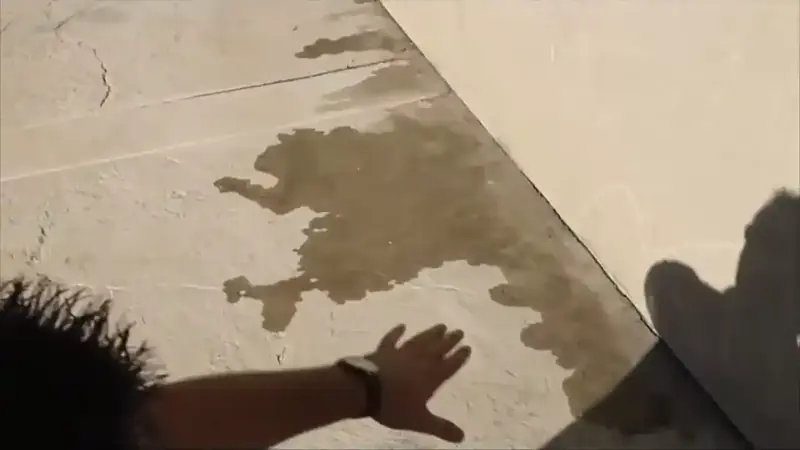
A slab leak is a supply or drain line failure beneath the concrete foundation of your home. Beaverton's newer neighborhoods, Triple Creek, Bonny Slope, Whitford, and the upper Cooper Mountain corridor, sit on slab foundations, and those slabs carry copper or PEX supply lines through the concrete pad. When one of those lines fails, water migrates through the slab, showing up as warm spots on the floor, unexplained TVWD water bill increases, or moisture wicking up through carpet.
What makes slab leaks in the Tualatin Valley distinct from other markets is the soil beneath them. Beaverton's silty clay loam, deposited across the valley floor, expands and contracts with the seasonal wet-dry cycle. An October-to-May wet season that brings 37 inches of rain keeps the soil saturated for six months, and when that soil dries in June, it contracts. That annual movement stresses supply-line joints under slab foundations over years and decades. By the time a slab home in Five Oaks or Murray Hill hits the 20-to-30-year mark, the joints have cycled through hundreds of seasonal shifts, and eventually one fails.
How We Find a Slab Leak in Beaverton
The detection process starts with the water meter. We shut off every fixture and check your TVWD meter for movement. If the dial turns with everything off, you have a pressurized leak somewhere in the supply system. The next step is to isolate whether the leak is above the slab or below it, which we do with pressure isolation testing, closing individual zone valves and watching how quickly each loses pressure.
Once we confirm a subslab loss, we use electronic listening equipment: a sensor pressed against the floor surface that amplifies the sound of pressurized water escaping through a pipe break. On a concrete slab, that acoustic signature travels well. An experienced operator can triangulate the source to within a few inches by moving the sensor systematically across the floor. For complex cases, we combine acoustic detection with tracer gas leak detection, which is especially effective when the leak is small or the pipe layout is complex.
The result is a marked location on your floor, a single repair point, not a trench. Our electronic leak detection approach avoids the exploratory demolition that older "jackhammer and search" methods required. For Beaverton slab homes in Five Oaks, Triple Creek, and the Cooper Mountain corridor, that precision matters because it minimizes disruption to flooring, tile, and the structural integrity of the pad.
Repair Options for Beaverton Slab Leaks
After locating the failure, we present repair options matched to the specific pipe material, the leak location, and the overall condition of the supply system:
Spot repair under the slab: The smallest access cut is made directly above the pinpointed failure, the damaged section is replaced, and the concrete is patched and refinished. This works well for isolated failures on PEX or newer copper in slab homes built after 2000 in Triple Creek and Whitford, where the rest of the pipe is still in good condition.
Pipe rerouting above the slab: Rather than cutting into the concrete, we run new supply lines through walls and ceiling spaces. For older copper in Murray Hill and Sexton Mountain slab homes where the pipe is approaching multiple-failure age, rerouting eliminates the single repair that will need to be repeated again in 18 months.
Trenchless repair: For some drain line failures, trenchless repair methods allow relining the pipe without cutting the slab at all. Trenchless works for drains but not for pressurized supply lines, the materials used for relining are not rated for supply pressures.
We discuss the cost and long-term value of each option before any work begins. Washington County homeowners can also call their TVWD account line with their confirmed leak documentation, TVWD offers bill adjustments for verified subslab leaks when the leak was not visible before detection.
Signs of a Slab Leak in Your Beaverton Home
The most reliable early warning is a TVWD water bill that climbs month over month without any change in household usage. A slow slab leak can run 24 hours a day for months before any visible evidence appears. Other signs include warm or hot spots on the floor (common with hot-water-line slab leaks), the sound of running water when all fixtures are off, lower pressure than usual at showers and faucets, and in severe cases, cracks forming in the slab or in the flooring materials above it.
If you notice any of these in a Beaverton slab home, call (503) 974-3329 for same-day detection. A confirmed early slab leak is a straightforward repair. An undetected slab leak that runs for six months erodes the concrete from below, causes structural settlement, and can push moisture into adjacent foundation walls, a much more expensive problem.
Frequently Asked Questions
The most reliable early indicator is a TVWD water bill that increases without explanation. Run the 60-second meter test: turn off every fixture, record your meter reading, wait 30 minutes, check again. If the meter moved, you have an active pressurized leak. Warm spots on the floor, running-water sounds when all fixtures are off, and lower-than-normal faucet pressure are also common indicators in Beaverton slab homes in Triple Creek, Five Oaks, and Murray Hill.
Detection and repair costs vary by leak location, access difficulty, and repair method chosen. Targeted electronic detection followed by a spot repair is typically the most economical option for isolated failures. Pipe rerouting above the slab costs more upfront but is often the correct long-term choice when older copper in 1990s slab homes is approaching multi-failure age. We provide a full assessment before quoting repair costs. TVWD also offers bill adjustments for verified slab leaks, which offsets a portion of the detection cost.
Sometimes yes. For supply line leaks where the pipe can be rerouted through walls and ceiling spaces, no concrete cutting is required at all. For drain line failures, trenchless lining methods can seal the pipe without excavation. For supply line spot repairs, a targeted cut directly above the pinpointed failure is unavoidable but is much smaller than exploratory demolition would require. We use electronic detection specifically to minimize the access size.
The highest call volume comes from the 1980s-2000s subdivisions on the valley floor: Murray Hill, Sexton Mountain, Greenway, Five Oaks, and the lower Cooper Mountain developments. These homes sit on concrete slabs with original copper supply that is now 25-45 years old, under the seasonal Tualatin Valley soil-movement cycles that stress joints over time. Newer construction in Triple Creek and Bonny Slope comes in second, driven by soil settlement in the first 10-20 years rather than pipe age.
Need Slab Leak Detection & Repair in Beaverton?
Oregon CCB licensed. Non-invasive detection first. Washington County specialists. 24/7 availability.
(503) 974-33299460 Adams St, Beaverton, OR 97003 | Washington County
Oregon CCB Licensed
Washington County Specialists
Non-Invasive Detection First
Slab Leak Detection & Repair in Beaverton, OR
Same-day service across Washington County. Non-invasive detection. Oregon licensed.
(503) 974-3329