
Non-Invasive Leak Detection in Beaverton, OR
Non-invasive leak detection means no wall is opened, no floor is cut, and no trench is dug until the failure location is confirmed. In Beaverton homes with finished surfaces, original tile, or period-accurate interior finishes, this detection-first approach protects what cannot be easily replaced.
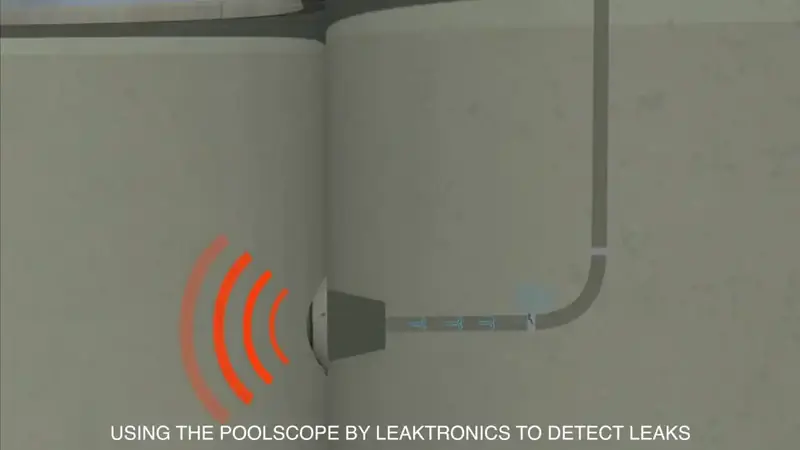
Non-invasive leak detection is not a specific technology -- it is a standard of practice: the commitment to locate the failure with precision before making any physical access to the building assembly. The tools used (acoustic sensors, thermal cameras, electronic leak locators, tracer gas equipment) are all non-invasive by nature. What makes a service provider non-invasive is the sequence: detection and confirmation first, access and repair second. Never the reverse.
In Beaverton, the non-invasive standard matters most in older homes with original or period-accurate interior surfaces that cannot be easily replicated. The cedar wainscoting in a 1940s Vose bungalow, the original Beaverton Craftsman tile floors in a West Slope home, the hand-plastered walls in a Raleigh Hills mid-century property -- these surfaces have value that generic drywall repair does not. Opening 8 feet of wall to find a pinhole that turns out to be 2 feet away destroys more than it would have cost to detect properly first.
The Non-Invasive Detection Sequence
Our non-invasive assessment follows a sequence from the least invasive to the most specific:
First, the TVWD meter test and basic pressure isolation confirm the leak's existence and approximate zone -- no equipment contact with the building required. Second, acoustic scanning of the affected zone using contact sensors on the wall or floor surface identifies the failure location within a few inches -- the only physical contact is a sensor held against the wall surface. Third, thermal imaging maps the moisture extent from the existing leak to show how far water has already migrated -- a camera aimed at the wall from the room, no contact required. Fourth, moisture metering at specific points confirms moisture levels at and around the suspected failure point -- a small probe pressed lightly against the wall surface.
Only after this sequence produces a confident failure location is any physical access made to the building assembly. The access hole is sized to the confirmed failure point, not to a speculative search area. For copper pinhole leaks in Cedar Hills and Raleigh Hills, this means a 4-6 inch square opening. For slab failures in Murray Hill, a 3-4 inch core drill. For buried service lateral failures, a single focused excavation at the marked surface point.
Why Non-Invasive Detection Matters in Beaverton's Housing Stock
Beaverton's oldest homes -- Central Beaverton, Vose, West Slope -- were built in an era when interior surfaces were crafted rather than applied. Period tile, original hardwood, lathe-and-plaster walls, and built-in cabinetry are components that cannot be cost-effectively restored once damaged by exploratory demolition. Non-invasive detection prevents the collateral damage that speculative wall-opening would otherwise cause.
Even in standard 1980s-2000s Beaverton tract homes, non-invasive detection reduces repair scope and cost: a single drywall patch is simpler and less expensive than four feet of drywall replacement, texture matching, and painting. The detection cost is offset by the repair cost reduction in most cases.
For non-invasive leak detection throughout Beaverton and Washington County, call (503) 974-3329. We serve older homes in Raleigh Hills and West Slope where original interior surfaces make detection-first especially important, newer homes in Murray Hill where minimizing slab repair scope is the priority, and all 29 service areas where the non-invasive principle applies regardless of construction era. Our pinpoint leak detection service describes the full multi-method sequence in detail.
Frequently Asked Questions
It means we locate the failure before opening anything. The detection process -- acoustic sensing, thermal imaging, pressure testing -- is conducted entirely at the wall or floor surface without cutting, drilling, or removing any material. Only after the failure location is confirmed to within a few inches is any access made to the building assembly. The access opening is sized to the confirmed repair point, not to a speculative search area. In practice, this means a targeted 4-6 inch square wall opening instead of 4 feet of opened wall, or a single 3-inch slab core instead of a demolition trench.
Non-invasive detection methods work reliably for active pressurized supply-line leaks in typical Beaverton residential construction. Some situations reduce detection effectiveness: very slow leaks that produce minimal acoustic signal, very thin-walled or very thick-walled pipe configurations that affect signal transmission, and environments with extremely high background noise. In those cases, detection methods are still applied, but additional confirmation steps or supplementary methods (such as tracer gas) may be needed before confident access is made.
Detection adds a line item to the service call that opening-and-searching does not have. But the total cost of detection plus targeted repair is almost always less than the total cost of speculative opening plus repair plus the additional finish work required for a larger access area. A 4-foot wall opening versus a 6-inch access panel means the difference between full drywall replacement with texture matching and painting versus a simple patch. The detection investment typically pays for itself in reduced repair scope.
Drain-side failures (which carry no supply pressure and produce no acoustic signal), very slow supply leaks at or below the acoustic detection threshold, and intermittent failures that are not active during the inspection are the primary limitations of non-invasive supply-side detection. Thermal imaging can sometimes find drain-side failures by detecting moisture migration, but requires some moisture accumulation to have already occurred for the temperature differential to be detectable. Intermittent failures require catching the leak in its active state, which may require scheduling the assessment when the failure pattern is most likely to be active.
Need Non-Invasive Leak Detection in Beaverton?
Oregon CCB licensed. Non-invasive detection first. Washington County specialists. 24/7 availability.
(503) 974-33299460 Adams St, Beaverton, OR 97003 | Washington County
Oregon CCB Licensed
Washington County Specialists
Non-Invasive Detection First
Non-Invasive Leak Detection in Beaverton, OR
Same-day service across Washington County. Non-invasive detection. Oregon licensed.
(503) 974-3329