
Yard Leak Detection & Repair in Beaverton, OR
Yard leaks in Beaverton are the hardest to find because the wet season hides them. Saturated Tualatin Valley soil from October through May makes a buried leak invisible at the surface -- the only indicator is a TVWD bill climbing month over month.
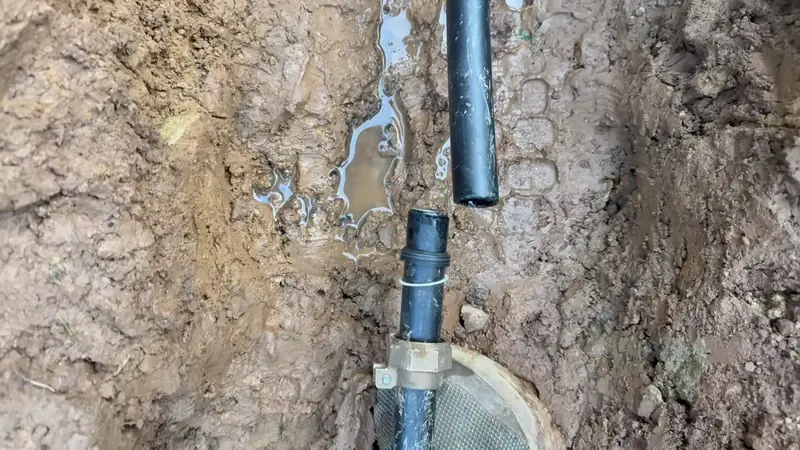
A yard leak in Beaverton creates a diagnostic problem that does not exist in drier climates. From October through May, Beaverton's silty clay loam stays saturated from 37 inches of annual rainfall. A buried pipe leaking 10 gallons an hour into already-wet soil produces no visible surface evidence -- no wet patch, no soft lawn area, no pavement heave. The water simply disappears into soil that is already holding all it can. The only reliable early indicator is a TVWD water meter that moves when every fixture in the home is off.
By dry season (June-September), a slow buried leak may finally appear as a persistently green or wet patch in an otherwise dry lawn -- or it may not appear at all if the leak is small and the soil drains adequately. Many Beaverton yard leaks run through an entire wet season, disappear into the soil through summer, and are only confirmed the following autumn when a homeowner finally runs the meter test after noticing two years of gradually rising water bills.
Common Buried Yard Leak Sources in Beaverton
The service lateral -- the water supply line from the TVWD meter at the street to the house -- is the most common buried yard leak source in Beaverton. In older Cedar Hills, Central Beaverton, and Five Oaks properties, this lateral may be original galvanized or early copper pipe from the 1950s-1970s installation. Both materials are at or past service life, and the combination of aging pipe plus Beaverton's seasonally expansive soil creates joint-failure conditions. Homeowners are responsible for the lateral from the TVWD meter inward; utility responsibility ends at the meter.
Irrigation mainlines are the second most common yard leak source. A buried PVC or poly mainline that stays pressurized year-round (even when the controller schedules no irrigation zones) leaks continuously regardless of irrigation season. A Beaverton homeowner with an in-ground system who notices a TVWD bill increase in December -- when no irrigation should be running -- has a strong indicator of an irrigation mainline failure rather than a seasonal usage increase. See our dedicated irrigation leak detection service for the full assessment process.
Hose bib supply lines running from the interior supply to an exterior spigot can also fail inside the wall or underground, particularly at the point where the line transitions from the heated house interior to the unheated exterior -- a stress point during the occasional Beaverton hard freeze. A leaking hose bib supply line may lose water that never reaches the outdoor spigot, instead dripping into the wall cavity or the crawlspace below.
Acoustic Ground Detection for Beaverton Yard Leaks
After the TVWD meter test confirms an active buried pressurized leak, we deploy acoustic ground-contact sensors along the suspected pipe route. Sensitive microphones amplified by detection equipment resolve the sound of pressurized water escaping through a small pipe breach through 18-36 inches of Tualatin Valley soil. The signal intensity peaks directly above the failure, allowing us to mark the repair point on the ground surface before any excavation begins.
For laterals running under driveways, concrete patios, or mature landscaping in older Beaverton neighborhoods, we supplement acoustic detection with tracer gas methods when surface noise or pipe depth reduces acoustic signal clarity. The goal in every case is a single targeted excavation at the confirmed failure point rather than speculative trenching.
After repair, we document the work for TVWD bill adjustment consideration. TVWD accepts written detection and repair documentation for billing adjustment requests on accounts where a confirmed supply leak resulted in excess billed usage. For yard leak detection and repair in Cedar Hills, Murray Hill, and all Washington County service areas, call (503) 974-3329.
Frequently Asked Questions
The TVWD meter test is the most reliable method when surface evidence is absent. Close every supply valve and fixture inside and outside the home. Watch the meter for 15-30 minutes. If the meter moves with everything off, you have an active pressurized leak somewhere in the supply system -- including potentially in the yard. In wet season, surface visual clues are typically absent regardless of leak size. The meter test works year-round and takes 15 minutes.
The property owner is responsible for the service lateral from the TVWD meter to the house, including all leaks in that section. TVWD maintains the water main in the street and the meter. Everything from the meter inward is the homeowner's system and the homeowner's repair cost. TVWD may offer a bill adjustment for documented excess usage caused by a confirmed service lateral leak -- but the repair cost itself is always the property owner's responsibility.
Yes. The irrigation mainline stays pressurized year-round as long as the main irrigation shutoff is open -- the mainline runs from the house supply through a backflow preventer and zone valve manifold regardless of whether any zones are scheduled. A crack or joint failure in the mainline leaks continuously in December just as it does in July. Irrigation mainline leaks are often discovered in winter precisely because the absence of any scheduled irrigation use makes the TVWD bill increase obvious.
Beaverton's mild marine climate means frost depth requirements are shallow compared to colder climates -- Oregon's frost depth code allows 12-inch burial in western Oregon for supply lines. However, service laterals are often deeper (18-36 inches) for traffic load and soil movement protection, particularly under driveways. Irrigation mainlines may be as shallow as 8-12 inches. The depth affects acoustic detection -- our equipment is calibrated for the 8-36 inch range typical in Washington County residential installations.
Need Yard Leak Detection & Repair in Beaverton?
Oregon CCB licensed. Non-invasive detection first. Washington County specialists. 24/7 availability.
(503) 974-33299460 Adams St, Beaverton, OR 97003 | Washington County
Oregon CCB Licensed
Washington County Specialists
Non-Invasive Detection First
Yard Leak Detection & Repair in Beaverton, OR
Same-day service across Washington County. Non-invasive detection. Oregon licensed.
(503) 974-3329