
Irrigation Leak Detection & Repair in Beaverton, OR
An irrigation mainline failure in Beaverton runs 24 hours a day regardless of the irrigation schedule -- the mainline stays pressurized year-round. A TVWD bill that increases in November and December, when irrigation should be off, points directly to a mainline leak.
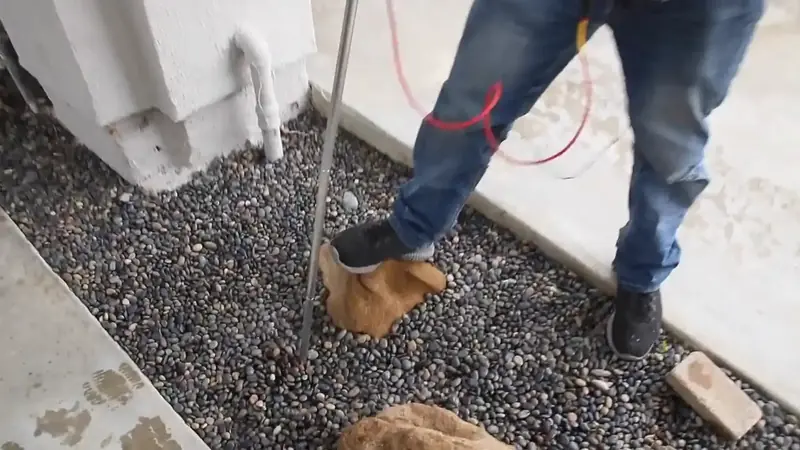
In-ground irrigation systems in Beaverton are a permanent water-delivery infrastructure with several distinct failure points, each producing a different symptom pattern. The mainline -- the pipe running from the backflow preventer at the house to the zone valve manifold -- stays pressurized whenever the main irrigation shutoff is open, regardless of whether any zones are scheduled to run. A failure in the mainline leaks continuously in January just as in July. Zone lateral pipes, by contrast, only carry water when their controlling valve opens on the irrigation schedule. A failed zone lateral leaks only when that zone activates. The distinction matters for diagnosis: continuous TVWD meter movement at all times points to the mainline; meter movement only during specific controller run times points to a zone lateral.
Beaverton's occasional freeze events add a seasonal failure pattern. Irrigation systems that were not properly winterized before the 2021 ice storm suffered PVC and poly pipe fractures in the top 8-12 inches of soil where the ground temperature dropped below freezing. These fractures may not have produced visible surface evidence until the following spring when the system was pressurized for the season. Annual winterization -- draining or blow-out of all zone laterals before the first freeze risk each year -- is standard practice that prevents this failure mode entirely.
Irrigation System Leak Assessment
Our irrigation leak assessment follows a systematic pressure-isolation approach. We start with the main irrigation shutoff and a pressure gauge at the backflow preventer: if the mainline loses pressure with all zone valves closed and the controller off, a mainline failure is confirmed. We then walk the mainline route using acoustic detection to identify the failure location.
For zone lateral assessment, we open each zone valve individually and observe: pressure that drops rapidly when a specific zone opens and does not reach the expected head count confirms a lateral pipe failure in that zone. A zone that activates without any heads producing water has a complete lateral failure downstream of the valve. We systematically narrow the failure location within the zone using pressure tests at intermediate points along the lateral route.
Zone valve failures are a separate category: a valve that does not open fully, does not close fully, or bleeds water through when it should be closed. A zone valve that bleeds continuously runs the zone heads at partial pressure around the clock -- the resulting slow wet area in the lawn is often mistaken for a lateral pipe failure rather than a valve problem. Valve solenoid and diaphragm condition are checked during any zone-by-zone assessment.
Irrigation and Beaverton's Dry Season Water Budget
Beaverton's June-September dry season requires active irrigation to maintain lawns and landscaping -- the PNW dry summer is reliable enough that without supplemental irrigation, most Beaverton lawns go dormant by August. TVWD's tiered rate structure means that irrigation season produces higher water usage and higher per-gallon cost in the upper usage tiers. An undetected irrigation leak during the dry season adds usage at the highest tier rates -- where Beaverton's irrigation water is most expensive per gallon.
For irrigation leak detection in Beaverton's Cooper Mountain, Bonny Slope, and Five Oaks neighborhoods -- where larger lots and established landscaping mean more complex irrigation systems -- call (503) 974-3329. We also check irrigation mainline and zone valve condition during yard leak assessments when a TVWD bill spike has an unclear source, serve the full Hillsboro corridor through Washington County, and assess Cooper Mountain hillside systems where slope movement adds lateral pipe stress.
Frequently Asked Questions
Run the TVWD meter test with the irrigation controller off and all zones closed, but the main irrigation shutoff valve open (leaving the mainline pressurized). Watch the meter for 15 minutes. If the meter moves with the controller off and no zones running, you have a mainline leak -- the leak is in the always-pressurized section before the zone valves. If the meter stays still with everything off, but moves when a specific zone runs, the leak is in that zone's lateral pipe or head connections.
Yes. Beaverton's mild climate does not produce annual hard freezes, but the occasional winter cold snap and ice events can freeze shallow irrigation pipe at 8-12 inch depth. Annual blow-out or drain winterization before the first freeze risk removes standing water from zone laterals and prevents freeze fractures. The mainline is typically deeper and less vulnerable, but zone lateral pipe in exposed or shallow locations is freeze-susceptible in a prolonged Beaverton cold event. October is the recommended timing for winterization in Washington County.
An irrigation mainline or zone lateral failure that results in water damage to structures (foundation, hardscaping, or interior if water infiltrates the home) may have the resulting damage covered under homeowners insurance, while the pipe repair itself is excluded. Gradual irrigation leaks that slowly saturate a foundation or cause long-term soil movement damage are typically excluded as maintenance issues. Document the leak discovery date and the extent of any resulting damage for any insurance inquiry.
A wet patch in a Beaverton lawn that persists when the irrigation controller is fully off (not just between scheduled run times) indicates either a mainline leak (always pressurized) or a zone valve that is not closing fully and bleeding water through continuously. Turn off the main irrigation shutoff and check whether the wet patch stops growing over 24-48 hours. If it does, the source is within the irrigation system. If the patch continues to grow with the irrigation shutoff closed, the source may be a supply line, service lateral, or groundwater issue rather than the irrigation system.
Need Irrigation Leak Detection & Repair in Beaverton?
Oregon CCB licensed. Non-invasive detection first. Washington County specialists. 24/7 availability.
(503) 974-33299460 Adams St, Beaverton, OR 97003 | Washington County
Oregon CCB Licensed
Washington County Specialists
Non-Invasive Detection First
Irrigation Leak Detection & Repair in Beaverton, OR
Same-day service across Washington County. Non-invasive detection. Oregon licensed.
(503) 974-3329