
Garbage Disposal Leak Repair in Beaverton, OR
Garbage disposal leaks originate from four distinct locations: the mounting ring at the sink, the side dishwasher port, the bottom seal around the motor, or the drain outlet connection. Each appears as water under the sink -- but each requires a different fix.
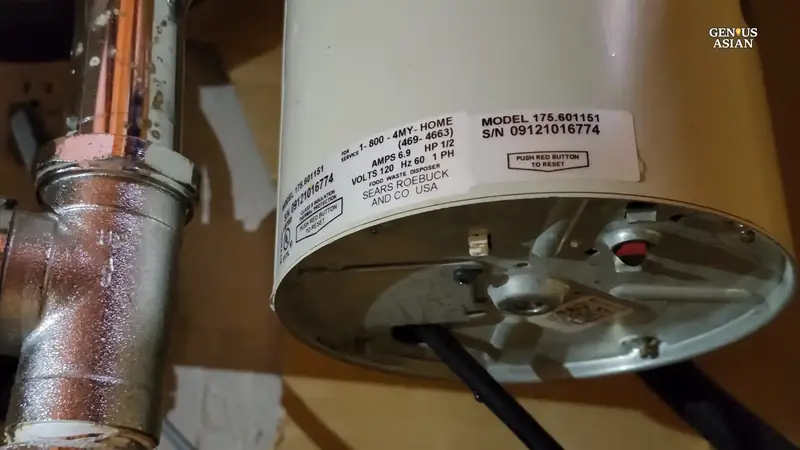
A garbage disposal leak appears as water under the kitchen sink -- but the source location on the disposal body changes everything about the repair. A leak at the top of the disposal (at the sink mounting ring) means the sink flange seal has failed and requires reseating the disposal or replacing the plumber's putty. A leak at the side of the disposal (at the dishwasher drain port) means the rubber cap or the port itself has failed. A leak at the bottom means an internal motor seal failure, which in most disposals means replacement rather than repair. A leak at the drain outlet means the connection between the disposal and the drain pipe has failed -- a straightforward fitting repair.
Because all four failure points route water to the same general location under the sink, the first diagnostic step is identifying which part of the disposal body is wet during operation. A dry paper towel held against each connection point during disposal operation locates the active leak source clearly. We work through this diagnostic sequence on every garbage disposal call before recommending a repair or replacement.
Garbage Disposal Leak Sources
Mounting ring (sink flange) leak: The disposal mounts to the sink basin through a flange assembly sealed with plumber's putty. Over time, the putty seal degrades and allows water to seep between the flange and the sink at the drain opening. This leak appears at the very top of the disposal body during sink use (not disposal use specifically) -- water from the sink basin runs down through the gap at the sink drain and appears at the top of the disposal hanging below. Remounting the disposal with fresh plumber's putty resolves this type of failure without replacing the unit.
Dishwasher drain port leak: Most garbage disposals include a side inlet port where the dishwasher drain hose connects. On new disposals, this port is sealed with a knockout plug that must be removed before connecting the dishwasher. If the dishwasher is not connected, the plug must remain in place. A missing or failed knockout cap allows water to leak from that port during disposal operation. A worn hose clamp or deteriorated hose connection at the dishwasher port produces the same symptom. This failure is more common in older Cedar Hills and Murray Hill kitchens where original dishwasher connections were made during the 1980s-1990s installation.
Bottom seal (motor seal) failure: The bottom of the disposal housing contains the motor shaft seal. When this seal fails -- from age, overheating through motor strain, or normal wear -- water appears at the very bottom of the disposal unit. Motor seal failure in a garbage disposal is generally not repairable as an isolated component; the seal is internal to the motor housing. A disposal leaking from the bottom is typically at end of life and warrants replacement. Average disposal lifespan in Beaverton residential use is 8-12 years, with soft Bull Run water providing no appreciable scale buildup that would affect the grinding components.
Drain outlet connection: The outlet where the disposal's waste discharge connects to the sink P-trap uses a slip-joint connection with a rubber gasket. This gasket hardens and fails with age, particularly in older installations. The leak appears at the connection point on the side-bottom of the disposal where the discharge pipe exits. Replacing the slip-joint gasket or the connection assembly restores the seal without replacing the disposal unit.
For garbage disposal leak assessment and repair in Beaverton and Washington County, call (503) 974-3329. For disposals that have already allowed water to damage the sink cabinet below, our sink leak detection assessment documents moisture extent in the cabinet before repair begins. Homeowners in Cedar Hills with original kitchen installations approaching 30 years should inspect under-sink connections during any disposal service call, and those in Murray Hill with early-1990s kitchens should check dishwasher port hose clamp condition at the same visit.
Frequently Asked Questions
The location on the disposal body identifies the failure source. Dry the disposal and all connections with a paper towel. Run water in the sink (without running the disposal) and observe where moisture first appears. If water appears at the very top where the disposal meets the sink drain, the mounting ring putty seal has failed. If water appears at the side where a hose connects (or where a rubber cap sits), the dishwasher port seal has failed. If water appears at the very bottom of the unit during operation, the motor seal has failed. If water appears at the side-bottom where the drain pipe exits, the discharge connection gasket has failed.
It depends on the failure location and the unit's age. A mounting ring leak, dishwasher port leak, or drain outlet connection failure are inexpensive repairs on any unit regardless of age -- the disposal itself is sound. A motor seal (bottom) leak on a unit over 8 years old is generally a replacement decision, since the motor seal failure indicates wear that will be followed by other component failures. Disposals approaching 12 years of age with any type of leak are typically better replaced than individually repaired at this point in their service life.
Yes -- and this is one of the most common sources of under-sink cabinet rot and mold in Beaverton kitchens. A disposal that leaks at the drain outlet connection or mounting ring drips water onto the cabinet floor with every sink use. In Beaverton's ambient humidity, the moisture does not fully dry between uses. Over months, the cabinet base swells, the floor sheathing beneath absorbs moisture, and mold develops in the enclosed space. The cabinet damage often requires more work to remediate than the disposal repair itself.
If the disposal leaks specifically when the dishwasher runs and not during normal sink use, the dishwasher drain connection at the disposal side port is the failure source. Dishwashers drain through a hose connected to the side inlet of the disposal. A worn hose clamp, a cracked drain hose, or a degraded rubber fitting at the port allows dishwasher drain water (which is hot and under pump pressure) to escape at the connection point. Check the hose clamp tightness and hose condition at the disposal connection as the first diagnostic step.
Need Garbage Disposal Leak Repair in Beaverton?
Oregon CCB licensed. Non-invasive detection first. Washington County specialists. 24/7 availability.
(503) 974-33299460 Adams St, Beaverton, OR 97003 | Washington County
Oregon CCB Licensed
Washington County Specialists
Non-Invasive Detection First
Garbage Disposal Leak Repair in Beaverton, OR
Same-day service across Washington County. Non-invasive detection. Oregon licensed.
(503) 974-3329