
Wall Leak Detection & Repair in Beaverton, OR
A wet or discolored wall in a Beaverton home means water has been present in the wall cavity long enough to saturate the drywall surface. By that point the framing behind the drywall has typically been wet for weeks. Non-invasive acoustic and thermal detection finds the pipe before the wall opens.
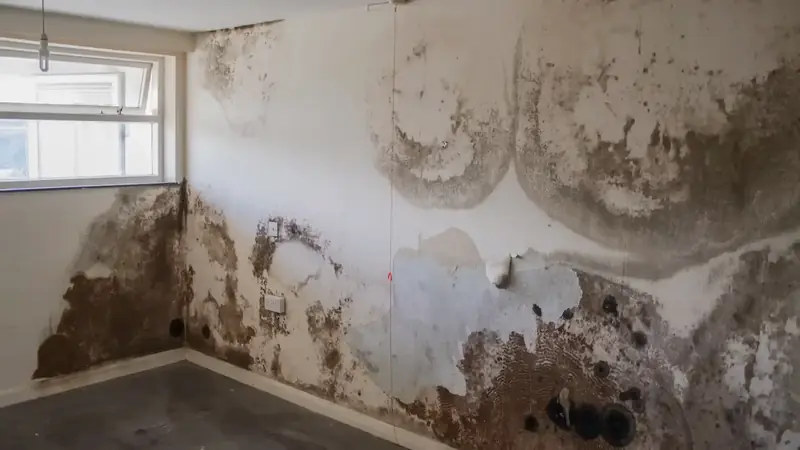
Wall leaks in Beaverton homes are most often hidden supply-line failures -- a pinhole in a copper pipe, a joint separation on a copper elbow, or a PEX fitting that has failed. These failures place water directly into the wall cavity where it saturates insulation, wets framing members, and eventually reaches the drywall surface. In Beaverton's humid marine climate, a modest wall-cavity leak can maintain enough moisture to support active mold growth within 48 hours without producing any visible surface indicator. The visible bubble, soft spot, or discoloration that homeowners call about often represents weeks or months of prior hidden damage.
The strongest early indicator of a wall leak in Beaverton is not a visual symptom -- it is a TVWD water bill that increases month over month without any change in household fixture usage. A pinhole in a Cedar Hills copper supply line running through an exterior wall can lose 50-100 gallons per day without ever producing a visible wall symptom for months. The meter test -- shutting off all fixtures and watching whether the TVWD meter moves -- is the 30-second detection method every Beaverton homeowner should run when a bill increase appears unexplained.
Acoustic Detection: Finding the Pipe Before Opening the Wall
The principle behind acoustic wall leak detection is straightforward: pressurized water escaping through a small opening produces a distinctive sound signature -- a hiss or a mix of hiss and rumble that differs from ambient sound -- that travels through the pipe material and through the wall assembly. A contact microphone pressed against the drywall surface amplifies that sound, and a skilled technician can trace the signal along the wall to identify the highest-amplitude point directly above the failure.
For 1960s-1990s copper supply lines in Cedar Hills, Garden Home, and Highland Beaverton homes -- the cohort most vulnerable to Bull Run soft-water pinhole corrosion -- acoustic detection typically narrows the failure location to within 4-6 inches along the wall surface. That precision allows a single access panel to be cut at the identified point rather than opening long sections of wall speculatively. The access hole made for a targeted repair is typically 6-10 inches square. A repair done through exploratory demolition without acoustic detection can require opening 4-8 linear feet of wall before the failure is found.
Thermal Imaging for Wall Moisture Mapping
Where acoustic detection locates the active leak point, thermal imaging maps the extent of moisture that has already migrated from that point. A wet wall cavity at 50 degrees appears distinctly different from dry adjacent framing in thermal imaging, allowing us to show the homeowner a heat-map of the damage extent before any drywall is opened. This is particularly useful in Beaverton for:
Quantifying damage for insurance documentation before demolition alters the evidence, providing a repair scope estimate that accounts for the full moisture extent rather than just the access point, and confirming after repair and drying that the wall assembly has returned to acceptable moisture levels before new drywall is installed.
For wall leak detection in Beaverton -- whether the symptom is a soft spot in the drywall, a discolored patch, a bubbling paint surface, or just a TVWD bill spike -- call (503) 974-3329. We serve all neighborhoods including Cedar Hills and Garden Home where the 1960s-1980s copper cohort is generating the most wall leak calls in Washington County.
Frequently Asked Questions
The earliest reliable indicator is a TVWD water bill increase without any change in fixture usage. Run the meter test: turn off every supply valve and fixture inside and outside the home, then watch the TVWD meter for 15-30 minutes. If the meter moves with everything off, you have an active pressurized leak somewhere in the supply system, which may be behind a wall. Visual signs -- a soft or discolored patch on drywall, a paint bubble, or a musty smell from a specific wall -- typically appear weeks after the leak has been running.
Detection does not require opening the wall -- acoustic and thermal methods identify the failure location non-invasively. Repair does require access to the pipe. The goal of non-invasive detection is to minimize the access hole size: a confirmed 6-inch target location requires a single small panel cut rather than speculative demolition of a long wall section. For Beaverton homes with decorative finishes, period-accurate drywall texture, or wallpaper, minimizing the access size has significant practical value.
Cedar Hills, Garden Home, Highland Beaverton, and West Slope homes built in the 1960s-1980s have copper supply lines that are now 40-60 years old. Beaverton's Bull Run water -- ultra-soft at under 10 mg/L hardness -- is mildly corrosive to aging copper without the protective mineral coating that harder water provides. This soft-water-plus-age combination produces the pinhole pitting pattern that is driving wall leak calls across the Portland metro area's 1960s-1990s copper housing cohort. Each of these homes carries copper pipe that has experienced decades of this chemistry.
Yes. A supply pipe leak running inside a framed wall cavity wets the wall framing continuously. In Beaverton's climate, where ambient humidity during the October-May wet season is already high, wall-framing moisture does not dry between leak events. Six months of continuous or near-continuous wetting in a Cedar Hills or Garden Home wall cavity can produce significant wood rot in the wall plate, studs, and any bottom plate in contact with the subfloor. Structural repairs compound the cost significantly compared to catching the leak early.
Need Wall Leak Detection & Repair in Beaverton?
Oregon CCB licensed. Non-invasive detection first. Washington County specialists. 24/7 availability.
(503) 974-33299460 Adams St, Beaverton, OR 97003 | Washington County
Oregon CCB Licensed
Washington County Specialists
Non-Invasive Detection First
Wall Leak Detection & Repair in Beaverton, OR
Same-day service across Washington County. Non-invasive detection. Oregon licensed.
(503) 974-3329