
Crawl Space Leak Detection & Repair in Beaverton, OR
Beaverton's 37-inch wet season keeps crawlspace moisture a year-round concern in older Cedar Hills, Raleigh Hills, and Central Beaverton homes. Distinguishing plumbing leak contributions from groundwater intrusion determines the correct repair -- and the two often overlap.
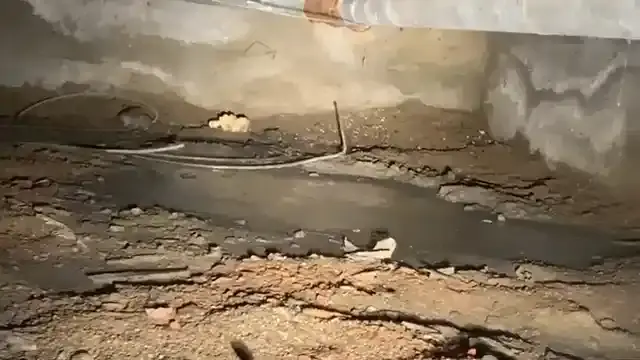
Crawlspace moisture assessment in Beaverton requires addressing two completely different water sources that frequently coexist: groundwater intrusion from the seasonally saturated Tualatin Valley soil pressing against and entering the crawlspace from outside, and plumbing leaks from the supply and drain pipes running through the crawlspace from above. Both produce moisture in the same enclosed space. Both can occur simultaneously in the same crawlspace. But they require entirely different repairs -- drainage improvements and vapor barrier upgrades for groundwater, pipe repair for plumbing leaks -- and spending money on the wrong fix while the other source continues is an expensive outcome.
Our crawlspace assessment begins with a physical crawlspace inspection that checks for standing water, moisture patterns on the crawlspace walls and floor, vapor barrier condition and coverage, sump pit and pump operation, plumbing pipe and fitting condition in the crawlspace, and the presence of wood rot, mold, or pest activity that indicates chronic moisture exposure. The inspection findings determine which moisture source categories are present before any repair recommendation is made.
Plumbing Leaks in Beaverton Crawlspaces
The supply and drain pipes in a Beaverton crawlspace experience conditions that interior-wall plumbing does not: temperature swings between the cold unheated crawlspace and the heated living space above, ambient moisture exposure year-round, and in some cases physical movement from crawlspace access activity or soil settlement beneath the crawlspace floor. Older galvanized supply lines in Central Beaverton and Vose crawlspaces are particularly vulnerable -- their interior corrosion produces the same flow restriction and joint failure seen in above-grade galvanized, but the crawlspace environment also accelerates exterior rust that weakens the pipe body.
Copper supply lines in crawlspaces are also subject to the Bull Run soft-water pinhole pattern that affects above-grade copper in Cedar Hills and Garden Home homes. A pinhole in a crawlspace copper line drips directly onto the crawlspace soil or vapor barrier -- which in a damp Beaverton crawlspace looks identical to groundwater moisture. The distinction matters: a crawlspace that smells like plumbing drain odor rather than soil odor, or where the moisture appears localized around a pipe rather than distributed across the crawlspace floor, suggests a plumbing source.
Groundwater and Seasonal Saturation in Beaverton Crawlspaces
Most Beaverton crawlspace homes with pre-1990 construction have inadequate vapor barriers and drainage for the PNW wet season. Older crawlspaces in Central Beaverton, Vose, and older Cedar Hills may have no vapor barrier, a deteriorated polyethylene sheet with gaps and holes, or a barrier that does not extend to the foundation walls. Without a complete vapor barrier, the Tualatin Valley's saturated soil releases moisture vapor into the crawlspace year-round, and the enclosed space allows that moisture to concentrate on wood framing, insulation, and the underside of the floor sheathing above.
A properly functioning sump pump is the primary groundwater defense in a Beaverton crawlspace. See our sump pump assessment service for inspection and repair detail. When a sump pump fails during the October-May wet season, water accumulates in the crawlspace within days. We respond to crawlspace flooding emergencies throughout Washington County -- call (503) 974-3329 for same-day response.
For non-emergency crawlspace moisture assessment in homes across Cedar Hills, Vose, and all Beaverton neighborhoods with crawlspace construction, we provide a written assessment that identifies all moisture sources, documents existing drainage and vapor barrier condition, and distinguishes plumbing from groundwater contributions before any repair scope is recommended.
Frequently Asked Questions
Timing provides the primary clue: groundwater intrusion in Beaverton typically worsens during the October-May wet season and improves in summer dry months. Plumbing leaks are relatively constant regardless of weather -- a dripping fitting in the crawlspace drips the same in July as in February. If your crawlspace is drier in summer despite no maintenance changes, the moisture source is primarily groundwater. If the moisture level is roughly constant year-round, a plumbing source is more likely. A professional crawlspace inspection can distinguish the two sources directly by examining moisture patterns and pipe condition.
An adequate vapor barrier for the PNW wet season covers the entire crawlspace floor with no gaps, overlaps seams by at least 12 inches, extends up the foundation walls by 6-12 inches and is secured to the wall, and has no holes, tears, or gaps around pipe penetrations. Older Beaverton crawlspace homes often have thin polyethylene sheets with gaps, holes, and no wall coverage. A full upgrade to a 10-20 mil reinforced vapor barrier with taped seams is the recommended standard for chronic moisture environments like the Tualatin Valley wet season.
Yes. A dripping supply fitting in a Beaverton crawlspace wets the subfloor sheathing above the drip point. Combined with the crawlspace's already-elevated humidity, the subfloor never fully dries between drips. Over a wet season, the repeated wetting cycles can produce wood rot in the subfloor sheathing and floor joists directly above the leak. Soft spots in a floor, particularly in rooms above the crawlspace in older Cedar Hills and Central Beaverton homes, are often traced to crawlspace plumbing drips that have been running through one or more wet seasons.
Standard Oregon homeowners policies typically do not cover crawlspace moisture from groundwater intrusion or gradual moisture accumulation. Sudden plumbing failures that cause unexpected crawlspace flooding may have the resulting damage covered under the policy's plumbing failure provision. Gradual crawlspace plumbing drips that produce wood rot are typically excluded as a maintenance issue. Document the failure discovery date and cause for any insurance inquiry. TVWD may offer a bill adjustment for verified supply-line leaks in crawlspaces that have been confirmed and repaired.
Need Crawl Space Leak Detection & Repair in Beaverton?
Oregon CCB licensed. Non-invasive detection first. Washington County specialists. 24/7 availability.
(503) 974-33299460 Adams St, Beaverton, OR 97003 | Washington County
Oregon CCB Licensed
Washington County Specialists
Non-Invasive Detection First
Crawl Space Leak Detection & Repair in Beaverton, OR
Same-day service across Washington County. Non-invasive detection. Oregon licensed.
(503) 974-3329