
Pressure Regulator Valve Repair in Beaverton, OR
TVWD supply pressure in parts of Beaverton exceeds 80 psi -- above the 60-80 psi residential design range. A failed or absent pressure regulator valve allows that excess pressure to stress every pipe, fitting, and fixture in the home continuously, accelerating failure rates across the entire supply system.
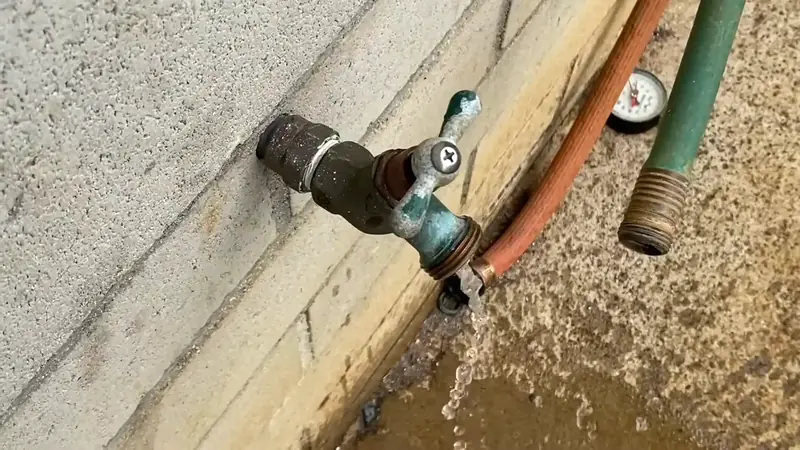
The pressure regulator valve (PRV) is a mechanical device installed on the main supply line where it enters the home that reduces the higher street pressure to a safe working pressure for residential plumbing -- typically set between 60 and 75 psi. In Beaverton, TVWD supply pressure varies by zone and elevation: lower-elevation neighborhoods near the Tualatin Valley floor may see 65-70 psi, while higher-elevation areas on Cooper Mountain and West Slope, where TVWD pressure zones are set to ensure adequate flow at upper service points, can see 90-110 psi at the meter. Without a functioning PRV, that elevated pressure enters the home's supply system unchanged.
High supply pressure accelerates plumbing failures across the board. Faucet cartridges and O-rings wear faster under elevated pressure. Water heater T&P valves may discharge periodically because tank pressure reaches the valve's relief threshold -- a 150-psi rated T&P valve that trips at 80 psi supply indicates excess incoming pressure, not a tank problem. Dishwasher and washing machine supply hoses, rated for typical residential pressure, are under additional stress at elevated supply pressures. The hammering sound that occurs when a fast-closing solenoid valve shuts (water hammer) is louder and more damaging to pipe joints at high pressure. And the soft Bull Run water that is mildly aggressive toward aging copper is more aggressive under higher flow velocity driven by excess pressure.
PRV Failure Modes in Beaverton
PRVs are mechanical devices with a rated service life of 10-15 years. Failure modes include:
Pressure creep: The PRV allows pressure to slowly climb above its set point over time as the internal diaphragm and spring wear. A PRV set to 70 psi may allow 85-90 psi after several years of service. This failure is invisible without a pressure gauge but detectable by the downstream effects -- T&P valve dripping, increased faucet wear, water hammer complaints.
Complete failure open: The PRV stops regulating entirely, passing full street pressure into the supply system. This typically produces immediate symptoms: extremely high faucet flow velocity, T&P valve discharge, and sometimes audible pipe stress sounds.
Failure closed: The PRV closes completely, blocking supply to the home. No water from any fixture. This failure mode requires emergency replacement.
We check incoming supply pressure with a gauge at the hose bib nearest the main supply entry on every comprehensive plumbing assessment in Beaverton homes on Cooper Mountain, West Slope, and Bonny Slope where elevated pressure is most common. A reading above 80 psi with a PRV present indicates a worn regulator. A reading above 80 psi without a PRV installed indicates the home has never had one.
For PRV inspection and replacement in Beaverton and Washington County, call (503) 974-3329. We also assess PRV condition as part of water heater leak assessments when T&P valve discharge is the presenting symptom, during comprehensive pipe assessments when pressure-related failures are suspected, and for homeowners in Cooper Mountain where elevated TVWD pressure zones are most common.
Frequently Asked Questions
The PRV is typically located on the main supply line near where it enters the home, often in the crawlspace, utility closet, or near the water meter inside the home. It is a bell-shaped metal device about 3-4 inches long with a threaded adjustment screw on top. If you cannot identify a PRV on your main supply line, there may not be one installed. Homes built before current code on Cooper Mountain, West Slope, and other elevated Beaverton zones may have been permitted without a PRV if the pressure at the time of construction was within range. TVWD pressure can change with system upgrades.
The recommended residential supply pressure range is 60-80 psi. Below 40 psi produces poor fixture performance and may indicate a supply restriction. Above 80 psi accelerates wear on faucets, water heaters, and supply connections. Above 100 psi is considered high-stress for residential plumbing components and significantly accelerates failure rates. A pressure gauge screwed onto a hose bib (outdoor spigot) gives a direct reading of supply pressure at the point of measurement.
Elevated supply pressure does not directly cause pinhole corrosion -- that is a chemical process driven by water chemistry and pipe age. However, high pressure increases the flow velocity of water through the pipe, which accelerates the rate at which the mildly aggressive Bull Run water contacts the copper interior surface. High pressure also contributes to vibration and micro-movement at pipe joints, which can accelerate the mechanical stress that eventually causes joint separation independent of corrosion. In homes with aging copper already susceptible to soft-water pitting, high pressure is an additional accelerant.
PRV replacement is typically a 1-2 hour job including cutting out the old valve, installing the new valve with appropriate isolation valves, setting the output pressure to the target range (typically 65-70 psi for Beaverton residential), and verifying pressure at multiple points in the supply system. The main supply must be shut off at the TVWD meter for the duration of the installation. Oregon requires a licensed plumber for main supply line work, including PRV installation and replacement.
Need Pressure Regulator Valve Repair in Beaverton?
Oregon CCB licensed. Non-invasive detection first. Washington County specialists. 24/7 availability.
(503) 974-33299460 Adams St, Beaverton, OR 97003 | Washington County
Oregon CCB Licensed
Washington County Specialists
Non-Invasive Detection First
Pressure Regulator Valve Repair in Beaverton, OR
Same-day service across Washington County. Non-invasive detection. Oregon licensed.
(503) 974-3329